Types of Fetishes: A Simple Map of the Six Main Families
There are countless types of fetishes, but they sort neatly into six broad families: bodies and features, materials and wear, sensation and scene, power and psychology, roles and identity, and alt or subculture types.
Once you start reading about desire, the sheer number of named fetishes can feel endless, and it is fair to wonder whether there is any order underneath. There is. Almost every one of the types of fetishes people talk about slots into one of six broad families, and once the families come into view, the whole map turns a lot less overwhelming. This guide walks through all six in turn, gives a few real examples of each, and points you to the matching shelf in our encyclopedia so you can go deeper wherever something catches your eye. Think of it as a table of contents for your own curiosity.
Bodies and features
The first family is the body itself, or one particular part of it. The best known example is the foot fetish, the single most reported fetish anywhere, but the same pattern covers a pull toward hands, toward visible muscle, toward tattoos, or toward fuller, softer figures. What links them is attention landing on a feature that mainstream scripts tend to skip straight past. It might be the shape of a foot, or the ink running across a shoulder. If your eye keeps returning to one specific part of a person, that is your starting point, and the bodies and features shelf gathers the whole set.
Materials and wear
The second family moves from the person to what covers or touches them: fabric, texture, and the things people wear. Latex and leather are the headline materials, prized for the particular way they look, smell, and feel against skin. Clothing carries its own charge as well, whether that is lingerie, the specific sheen of stockings and nylons, or the authority suggested by a uniform. For many people the material is the main event rather than a background detail. If a certain fabric or garment is the thing that reliably flips the switch, the materials and wear shelf is your aisle.
Sensation and scene
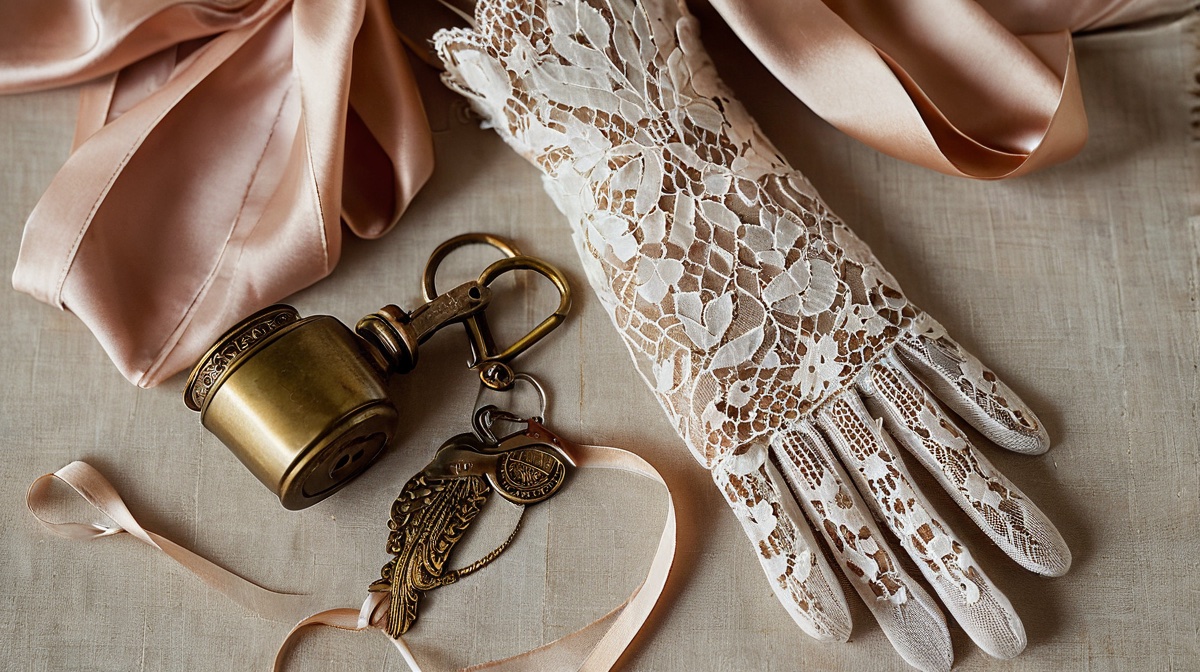
The third family is about what the body feels, and the small scenes built around those feelings. Here the draw is an experience more than an object. Tickling belongs here, alongside the slow theatre of dripping wax play, the sharp contrast of hot against cold in temperature play, and the way a simple blindfold turns the volume up on every other sense. Some of these come with genuine safety basics, like keeping wax at a low enough temperature that it never burns, which is exactly the sort of thing each entry spells out. The complete set lives on the sensation and scene shelf.
Power and psychology
The fourth family works on the mind and on who holds the reins. These are the dynamics of control, surrender, and the headspace that comes with them. Financial domination and humiliation sit here, and so do the charged patience of chastity and the warm, encouraging register of a praise kink, which is a useful reminder that this family runs from stern all the way to tender. Because everything in it turns on trust, clear consent and agreed limits carry even more weight than usual. When you are ready to read around the whole spectrum, the power and psychology shelf holds it.
Roles and identity
The fifth family is about stepping into a role or a shared story, where a lot of the appeal is who you get to be for an hour. Pet play and age play and ABDL are the most familiar entries, each built around a persona and a feeling rather than a single physical object. The careful ritual of medical play, with its gowns and gloves and check-ups, fits here too. If what moves you is the character and the scene more than any one item, the roles and identity shelf is where to head.
Alt, subculture, and type

The sixth family is the broad, imaginative edge, where interests organise around a type, a fantasy, or an entire subculture. This is home to monster and fantasy attractions, and to food-led play such as feederism. The boundaries out here are the loosest of the six, and these interests happily bleed into the other families, borrowing a material from one and a power dynamic from another. If the neat categories never quite fit you, that is normal, and the alt and subculture shelf is built for exactly that overflow.
Where to go from here
Six families, and nearly everything with a name finds a home in one of them, sometimes two at once. Many interests straddle a couple of these categories, which is completely ordinary, and the labels themselves matter far less than the quiet relief of learning that a thing you feel already has a name and a crowd of people who share it. If you are still working out where you land, our short discovery quiz can suggest a family to explore first, and the guide on how to discover your fetish covers gentler, slower ways to find out. And if you are earlier still, wondering what these words even mean, start with what a fetish is and come back to the map when you are ready.
Questions people ask
What are the main types of fetishes?
On fetish.life we group them into six families: bodies and features, materials and wear, sensation and scene, power and psychology, roles and identity, and alt or subculture types. Almost any specific fetish fits somewhere on that map.
What is the most common type of fetish?
Attraction to body parts, especially feet, is among the most commonly reported, and material fetishes like leather and latex have large, visible communities. Past that, prevalence gets hard to measure because so much of it stays private.
Can you have more than one fetish?
Yes, and many people do. Interests tend to cluster, so someone drawn to latex might also enjoy a particular power dynamic or role. Having several at once is common and does not mean anything is wrong.